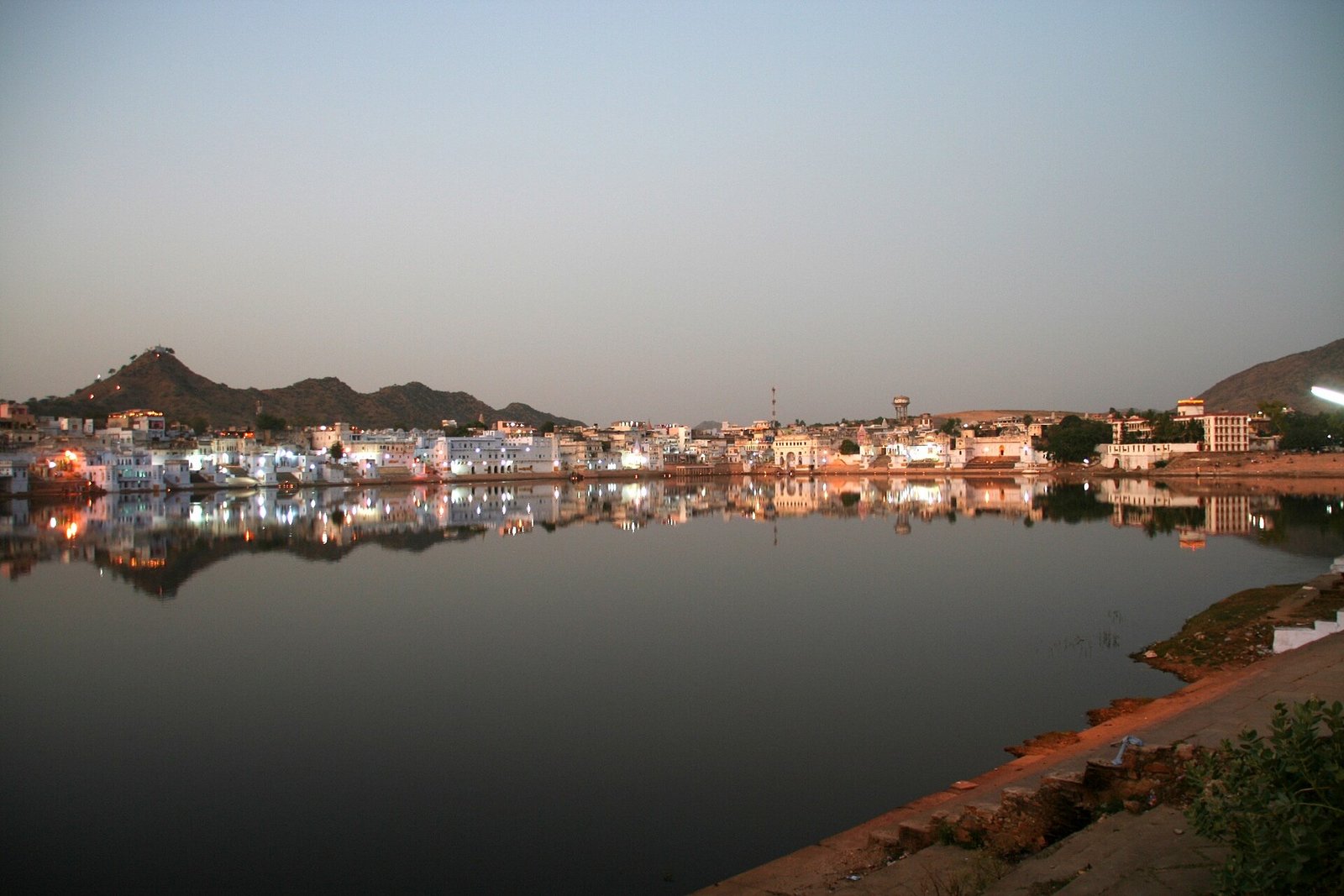
 Illustrative preview
Responsible travel in Pushkar is usually expressed through ordinary decisions rather than a special itinerary label. Where you walk, what you buy, how you photograph and the waste you leave behind all affect the people and places around you. Begin by asking what your visit requires from a neighbourhood, a business or a shared public space, then look for ways to make that demand reasonable.
The area around Pushkar Lake may receive many different kinds of visitors, while Lake-approach bazaars remains a working place for people with their own schedules. Treat both as more than backgrounds to your trip. Research local rules and the purpose of any conservation measures before you arrive. A restriction that seems inconvenient may be part of protecting a place or allowing everyday life to continue.
Pushkar, in its own words
Pushkar is shaped by the sacred lake and the hills around it. Temples, ghats and market streets are close enough to invite a measured walk, but worship determines the rhythm. Treat the surrounding viewpoints and neighbouring Ajmer as extensions rather than distractions from the town's quieter details. This Book247 edition connects Pushkar Lake with Varaha Temple, leaving room for Malpua and the everyday life around Lake-approach bazaars.
Make choices that are specific and visible
Carry only what you can manage and plan how to deal with your own waste until an appropriate disposal point is available. Refill water only where you are confident it is suitable for drinking. Avoid buying wildlife products or objects with doubtful provenance, and do not remove natural or historic material as a souvenir of the visit.
Choose local businesses for the quality and relevance of what they offer, while asking clear questions about who provides the service. A large organisation and a small independent operator can each behave responsibly or poorly. Broad claims about sustainability are less useful than concrete information about staffing, waste, transport, group size and the way an activity is conducted.
Respect people beyond the itinerary
Ask permission before making identifiable portraits and accept a refusal without negotiation. Keep entrances, residential lanes and shared facilities usable for others. Around Brahma Temple, follow the visitor route even if an unofficial shortcut appears attractive. Do not ask a guide to obtain access through relationships that have not been clearly authorised.
When discussing a trip with Book247, ask how the proposed route manages group impact and how any community encounter is arranged. Favour fewer unnecessary transfers and visits that support genuine learning. If an experience depends on intrusive behaviour, reconsider it. A rewarding visit should not require somebody else to lose their privacy or control of their workplace.
PUT A PLACE TO THE STORY
Three places to research
Pushkar Lake
The sacred lake and surrounding ghats form the centre of the pilgrimage town. Let the waterside setting shape a slower pause in the itinerary.
Brahma Temple
The red-spired temple remains one of Pushkar's principal places of pilgrimage and worship. Follow local worship etiquette and allow time for the surrounding precinct.
Varaha Temple
The shrine dedicated to Vishnu's boar incarnation adds another layer to the sacred circuit. Follow local worship etiquette and allow time for the surrounding precinct.
Keep the route realistic
Pushkar's temple streets curve around the lake, while Savitri rises above it; Ajmer requires a separate crossing of the intervening hills. Group nearby stops before crossing the wider urban area, and keep the two outlying journeys separate from the core sightseeing circuit. Distance on a map rarely captures every transfer.
Cooler months suit the ghats and hill viewpoints; summer heat and major fair dates alter the pace of visiting. Put exposed stops such as Pushkar Lake in the more comfortable part of the day, retain an indoor alternative, and confirm local conditions before committing to an excursion.
Before the plan becomes a trip
- Plan disposal for the waste you carry.
- Ask before photographing recognisable people.
- Choose products with clear, lawful provenance.
- Question vague sustainability claims with specifics.
Considerate travel is a practice repeated throughout the day. Let your visit to Pushkar be enjoyable without demanding special exceptions, intrusive access or careless use of shared space. Small choices made consistently can improve the experience for residents, other visitors and your own travelling party.
Sources & useful visitor links
Use the destination and heritage authorities below to check current visitor arrangements. Plan your visits around the current information published by these authorities.