 Illustrative preview
A monsoon visit to Delhi needs a flexible approach grounded in local conditions. Rain patterns differ widely, and a dramatic seasonal photograph says little about the practical journey you intend to make. Research the destination's seasonal context, then check current weather and official access information. Avoid treating rainfall as either an automatic reason to stay away or a guarantee of a particular landscape experience.
Review the route to Fatehpuri Masjid, the visitor surfaces and the places where you can pause under appropriate shelter. Think beyond the attraction itself: a workable visit also needs a sensible arrival, a return and a way to manage wet belongings. Keep the day's commitments light enough that a delay does not create pressure to continue along a route that no longer seems suitable.
Delhi, in its own words
This Delhi edition follows Shahjahanabad and the older city’s market-and-monument fabric, rather than duplicating the planned capital district covered separately as New Delhi. The Red Fort and Jama Masjid establish the historic frame; bazaars and active religious sites reveal how that fabric continues to work. Book247 favours a focused walk with pauses over an unrealistic dash across the whole metropolis. Wider Delhi monuments remain worthwhile, but belong to separate excursions from this old-city base.
Prepare alternatives before they are needed
Choose indoor or sheltered activities for their actual interest, not simply as interchangeable replacements. A collection, workshop or seated cultural experience may need its own reservation. Research Digambar Jain Lal Mandir and other options through current visitor information so that the alternative is real. An old list of rainy-day attractions may not reflect present access or facilities.
Keep transport decisions responsive to official local advice. Do not ask a driver to take an uncertain route to preserve the itinerary, and avoid approaching flooded or restricted areas for photographs. A plan can be changed or abandoned without making the trip a failure. The priority is a route appropriate to the conditions actually encountered.
Keep equipment and expectations practical
Pack rain protection and footwear suitable for the activities you choose, while keeping important documents and electronics protected. Check whether wet-weather equipment can be carried inside the sites on your plan. Allow extra time for ordinary transitions, including changing clothes or dealing with luggage, rather than assuming every delay can be recovered by moving faster later.
When enquiring with Book247, ask how weather-related changes are communicated and which costs remain payable if an outing cannot proceed. Research Humayun’s Tomb separately; conditions beyond the city may differ from those at your base. A good proposal identifies alternatives and responsibilities clearly, without promising that seasonal disruptions will never affect the journey.
PUT A PLACE TO THE STORY
Three places to research
Red Fort
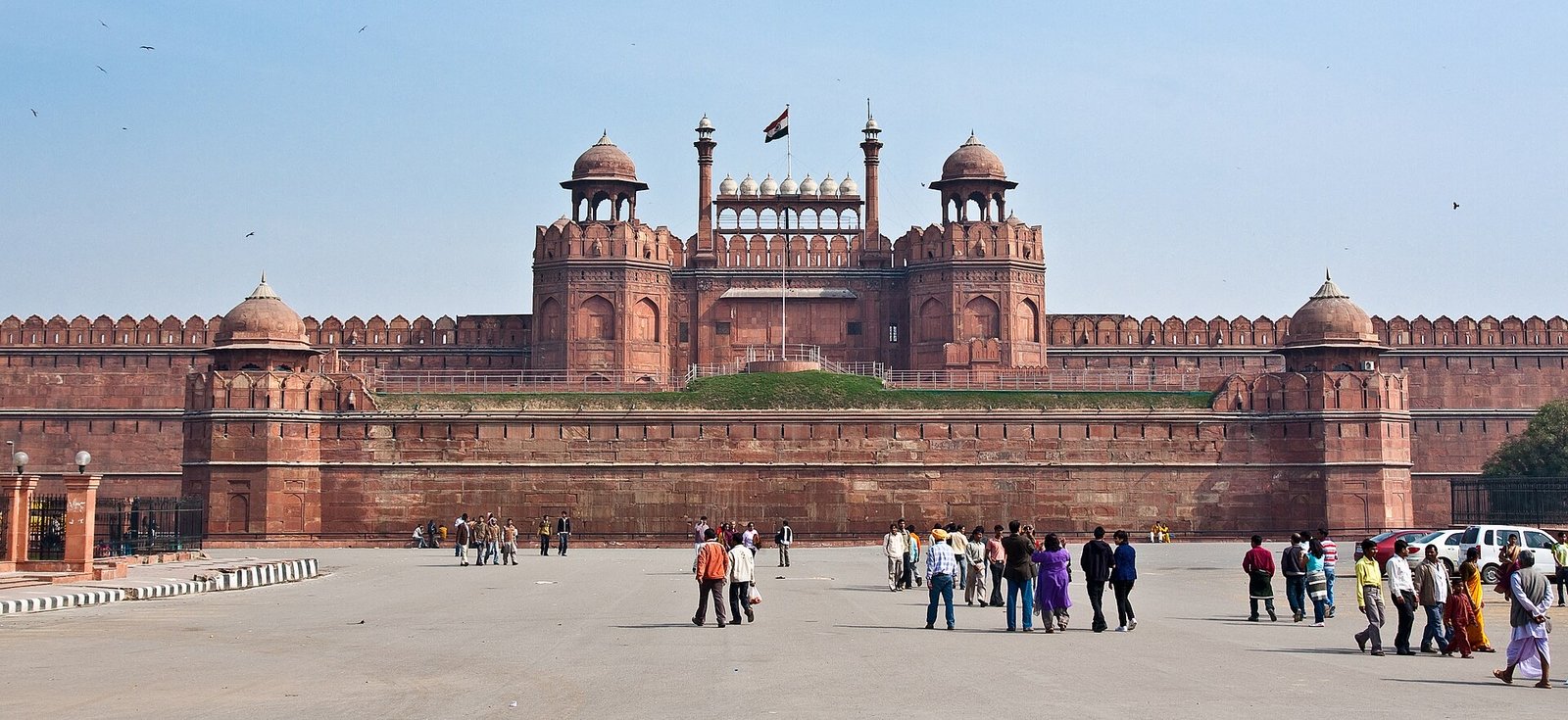
The Mughal fort anchors the eastern end of the old-city landscape. Give its courts and interpretation time, checking current access arrangements for individual sections.
Jama Masjid
The active mosque stands above the surrounding old-city streets. Visit with attention to prayer arrangements, dress expectations and the difference between worship and tourism.
Chandni Chowk
The historic commercial axis connects monument, religious sites and everyday trade. Walk in manageable sections rather than expecting the whole market district to behave uniformly.
Keep the route realistic
Build the main circuit around the Red Fort, Jama Masjid and Chandni Chowk, using the market axis to orient yourself. New Delhi’s capital boulevards are a different edition, while Humayun’s Tomb and the Qutb complex require separate cross-city journeys with realistic transit time.
Old-city walking is more comfortable in milder weather, with shorter sections and indoor pauses during hotter periods. Rain can change the ease of narrow market lanes. Religious occasions and commercial activity affect movement, so choose the day’s scale around current local conditions.
Before the plan becomes a trip
- Use current weather and official access updates.
- Check a genuine sheltered alternative in advance.
- Protect documents and electronics from rain.
- Clarify weather-related cancellation arrangements.
A monsoon itinerary works when it can change without losing its purpose. Keep the strongest experiences of Delhi in view, use current local information and allow the weather to influence the day. Flexibility is more useful than either romanticising the rain or planning as though it will not matter.
Sources & useful visitor links
Use the destination and heritage authorities below to check current visitor arrangements. Plan your visits around the current information published by these authorities.