 Illustrative preview
Choosing local transport in Delhi means comparing complete journeys rather than assuming one mode is best for every outing. The route, luggage, weather, access needs and number of people travelling can change the answer. Investigate which options actually serve your destination and how the final approach works. A transport stop near a place on the map may still leave a walk that is unsuitable for your party.
Start with the journeys that matter most: from your base to Chandni Chowk, onward to a suitable meal and back from the last activity. Read Build the main circuit around the Red Fort, Jama Masjid and Chandni Chowk, using the market axis to orient yourself. New Delhi’s capital boulevards are a different edition, while Humayun’s Tomb and the Qutb complex require separate cross-city journeys with realistic transit time., then verify current local information for the services you consider. Do not assume every city has the same public transport network, payment method or visitor support. A simple, well-understood route is often more useful than a theoretically efficient but uncertain connection.
Delhi, in its own words
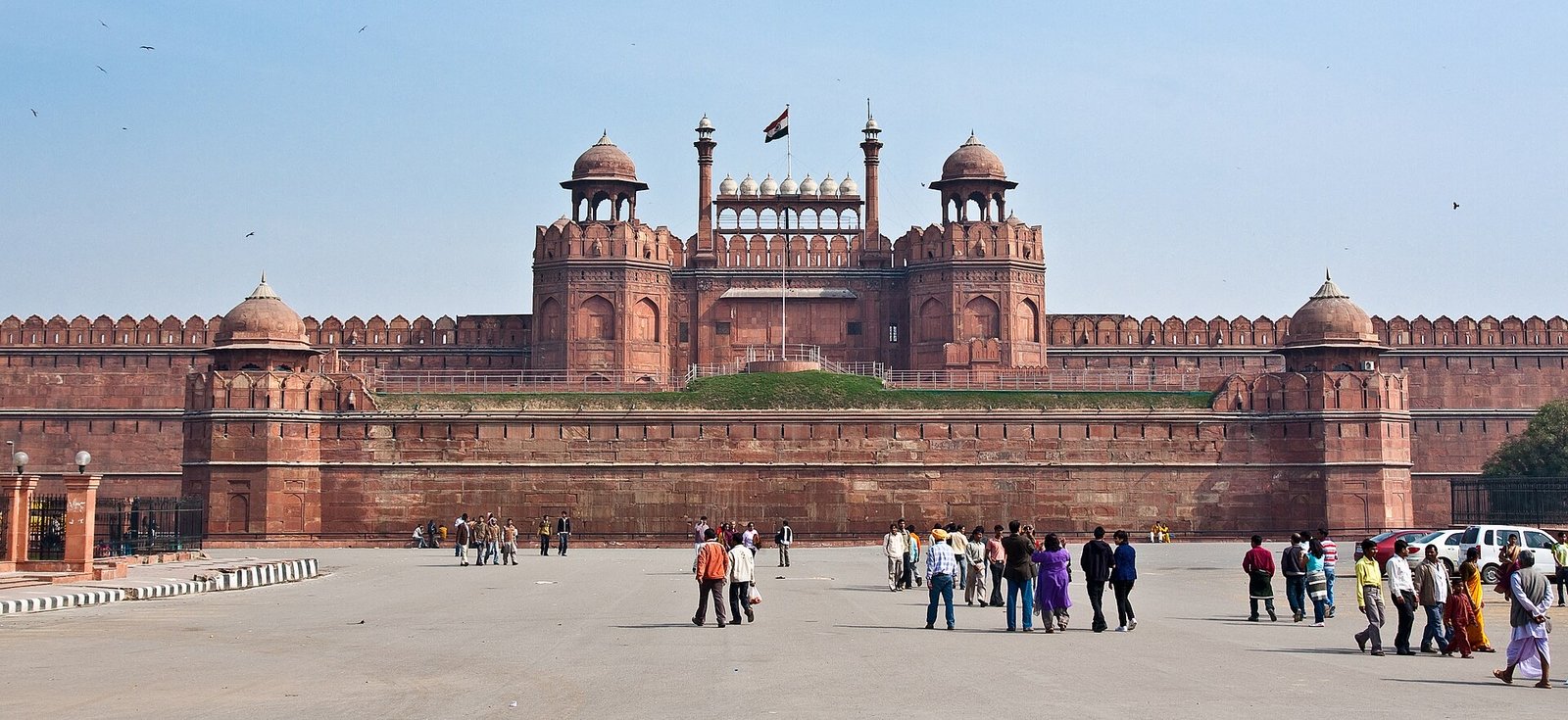
This Delhi edition follows Shahjahanabad and the older city’s market-and-monument fabric, rather than duplicating the planned capital district covered separately as New Delhi. The Red Fort and Jama Masjid establish the historic frame; bazaars and active religious sites reveal how that fabric continues to work. Book247 favours a focused walk with pauses over an unrealistic dash across the whole metropolis. Wider Delhi monuments remain worthwhile, but belong to separate excursions from this old-city base.
Compare the whole door-to-door movement
Include the time and effort of reaching a stop, waiting, changing services and walking from the arrival point. Ask whether the option remains practical with the bags or equipment you carry. If using public transport, check the current ticketing and operating information through the relevant authority. A guide's broad familiarity should not replace the details needed for the actual journey.
For a hired vehicle, confirm the category, pickup point and arrangements for waiting while you visit. Ask where the vehicle can legally stop near Gurdwara Sis Ganj Sahib or Khari Baoli. A promise to drop you close should be clarified into a usable location, especially if a passenger cannot comfortably walk the remaining distance or negotiate uneven surfaces.
Avoid paying for movement you do not need
A day concentrated in one area may not require a vehicle throughout, while a route with difficult connections may benefit from prearranged transport. Compare a retained vehicle with separate journeys using the same realistic itinerary. Include parking, waiting and any additional charges where relevant. The cheapest individual fare does not necessarily produce the most comfortable or economical day.
When discussing options with Book247, specify whether you need transport alone or a guided experience as well. Ask who handles changes and how the return is arranged. Keep one practical fallback for an essential journey, such as the trip to a departure point, without assuming you need duplicate arrangements for every movement during the stay.
PUT A PLACE TO THE STORY
Three places to research
Chandni Chowk
The historic commercial axis connects monument, religious sites and everyday trade. Walk in manageable sections rather than expecting the whole market district to behave uniformly.
Gurdwara Sis Ganj Sahib
The Sikh place of worship adds another important strand to Chandni Chowk’s religious geography. Follow community guidance and leave space for worshippers.
Fatehpuri Masjid
At the western end of the historic market axis, the mosque provides a useful point for understanding Shahjahanabad’s layout and continuing religious life.
Keep the route realistic
Build the main circuit around the Red Fort, Jama Masjid and Chandni Chowk, using the market axis to orient yourself. New Delhi’s capital boulevards are a different edition, while Humayun’s Tomb and the Qutb complex require separate cross-city journeys with realistic transit time.
Old-city walking is more comfortable in milder weather, with shorter sections and indoor pauses during hotter periods. Rain can change the ease of narrow market lanes. Religious occasions and commercial activity affect movement, so choose the day’s scale around current local conditions.
Before the plan becomes a trip
- Compare full door-to-door journeys.
- Check current ticketing and operating information.
- Confirm permitted pickup and drop-off points.
- Separate transport from guide responsibilities.
The right way to move around Delhi is the one that supports the experience you want and the people travelling. Compare actual routes, make the final approach visible and simplify where possible. Good transport planning should leave you thinking more about the place than about how to reach it.
Sources & useful visitor links
Use the destination and heritage authorities below to check current visitor arrangements. Plan your visits around the current information published by these authorities.