 Illustrative preview
An architectural visit to Delhi need not begin with expert vocabulary. Start by looking at how buildings meet the street, how shade is created and what materials appear repeatedly. Research Red Fort as one example, then compare it with the ordinary surroundings. The contrast between a celebrated structure and the places people use daily can be the most revealing part of the outing.
Avoid assigning a period or architectural style from appearance alone. Alterations, restorations and later additions can complicate a building's story. Use reliable sources to investigate Jama Masjid, and keep a small set of questions in mind: who commissioned it, what purpose it served and how its design responds to the setting. These questions work across many different kinds of city.
Delhi, in its own words
This Delhi edition follows Shahjahanabad and the older city’s market-and-monument fabric, rather than duplicating the planned capital district covered separately as New Delhi. The Red Fort and Jama Masjid establish the historic frame; bazaars and active religious sites reveal how that fabric continues to work. Book247 favours a focused walk with pauses over an unrealistic dash across the whole metropolis. Wider Delhi monuments remain worthwhile, but belong to separate excursions from this old-city base.
Look at the street as a complete place
Study the space between buildings as carefully as individual facades. Notice entrances, thresholds, street width, planting and the relationship between movement and pause. Around Khari Baoli, the arrangement of trading spaces may reveal more about the neighbourhood than an isolated photograph. Observe from appropriate public areas and avoid entering private property to improve a view.
Choose a compact route with a few deliberate comparisons. You might contrast a civic building with housing, a monumental entrance with a working street, or a newer intervention with an older setting. Check walking conditions and traffic crossings. Architectural interest should not require your group to negotiate a route that feels unsafe or exhausting.
Turn observations into better questions
Bring a notebook or use short voice notes to record what you do not yet understand. A repeated material, an unusual roofline or the orientation of a courtyard can become the subject of later research. If photography is permitted, record contextual views as well as details, so the image does not lose its relationship to the street.
For a specialist outing, ask Book247 about a guide brief that favours explanation over rapid movement. Confirm which buildings are only viewed externally and whether any visit depends on separate permission. Keep the itinerary flexible enough to spend longer at one place when its construction or everyday use opens an interesting conversation.
PUT A PLACE TO THE STORY
Three places to research
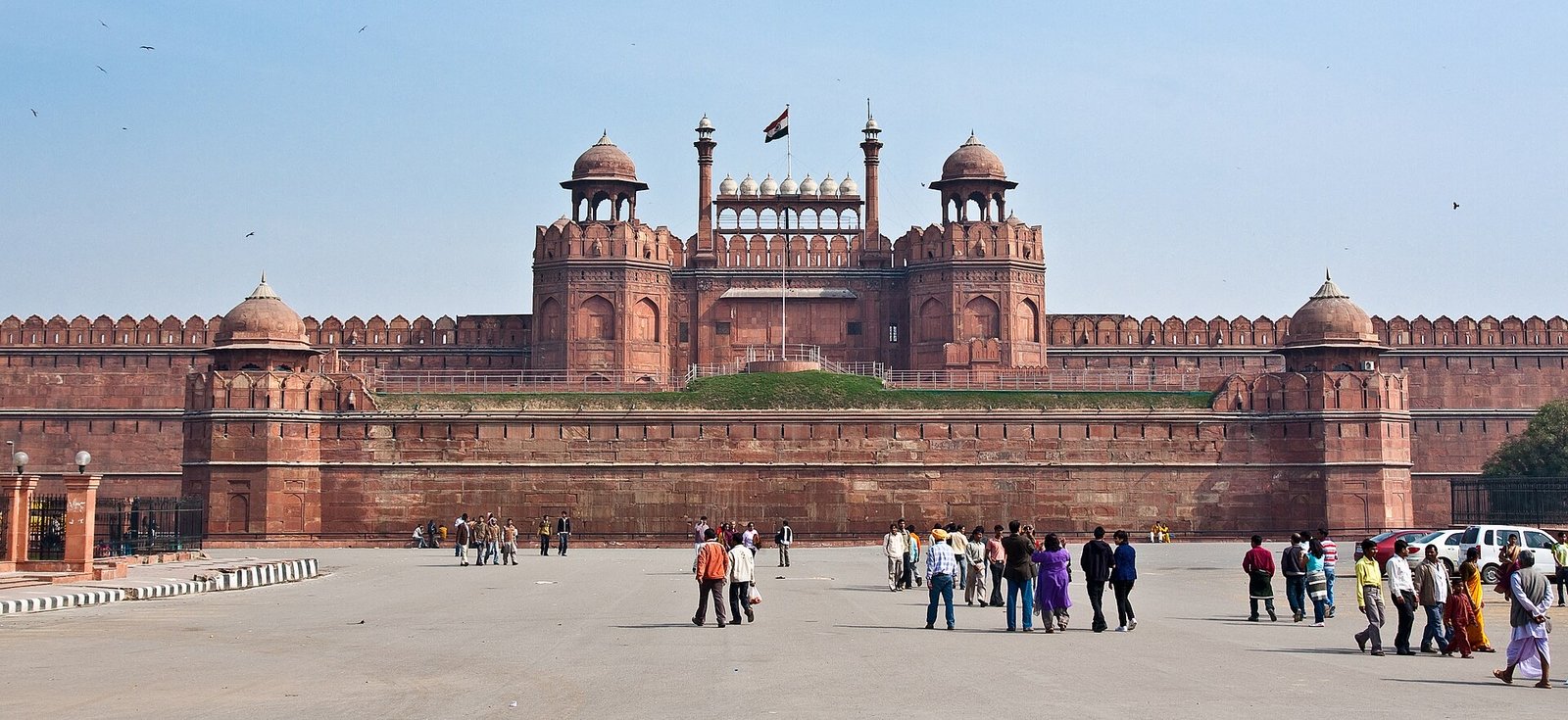
Red Fort
The Mughal fort anchors the eastern end of the old-city landscape. Give its courts and interpretation time, checking current access arrangements for individual sections.
Jama Masjid
The active mosque stands above the surrounding old-city streets. Visit with attention to prayer arrangements, dress expectations and the difference between worship and tourism.
Gurdwara Sis Ganj Sahib
The Sikh place of worship adds another important strand to Chandni Chowk’s religious geography. Follow community guidance and leave space for worshippers.
Keep the route realistic
Build the main circuit around the Red Fort, Jama Masjid and Chandni Chowk, using the market axis to orient yourself. New Delhi’s capital boulevards are a different edition, while Humayun’s Tomb and the Qutb complex require separate cross-city journeys with realistic transit time.
Old-city walking is more comfortable in milder weather, with shorter sections and indoor pauses during hotter periods. Rain can change the ease of narrow market lanes. Religious occasions and commercial activity affect movement, so choose the day’s scale around current local conditions.
Before the plan becomes a trip
- Verify style and date claims before repeating them.
- View private buildings from permitted public space.
- Plan safe crossings and comfortable observation points.
- Photograph context as well as architectural details.
Architecture becomes more engaging when you connect design with daily use. Let Delhi teach you a few ways of looking, from the scale of a doorway to the shape of a street. You do not need to name every style to notice something worth understanding.
Sources & useful visitor links
Use the destination and heritage authorities below to check current visitor arrangements. Plan your visits around the current information published by these authorities.