 Illustrative preview
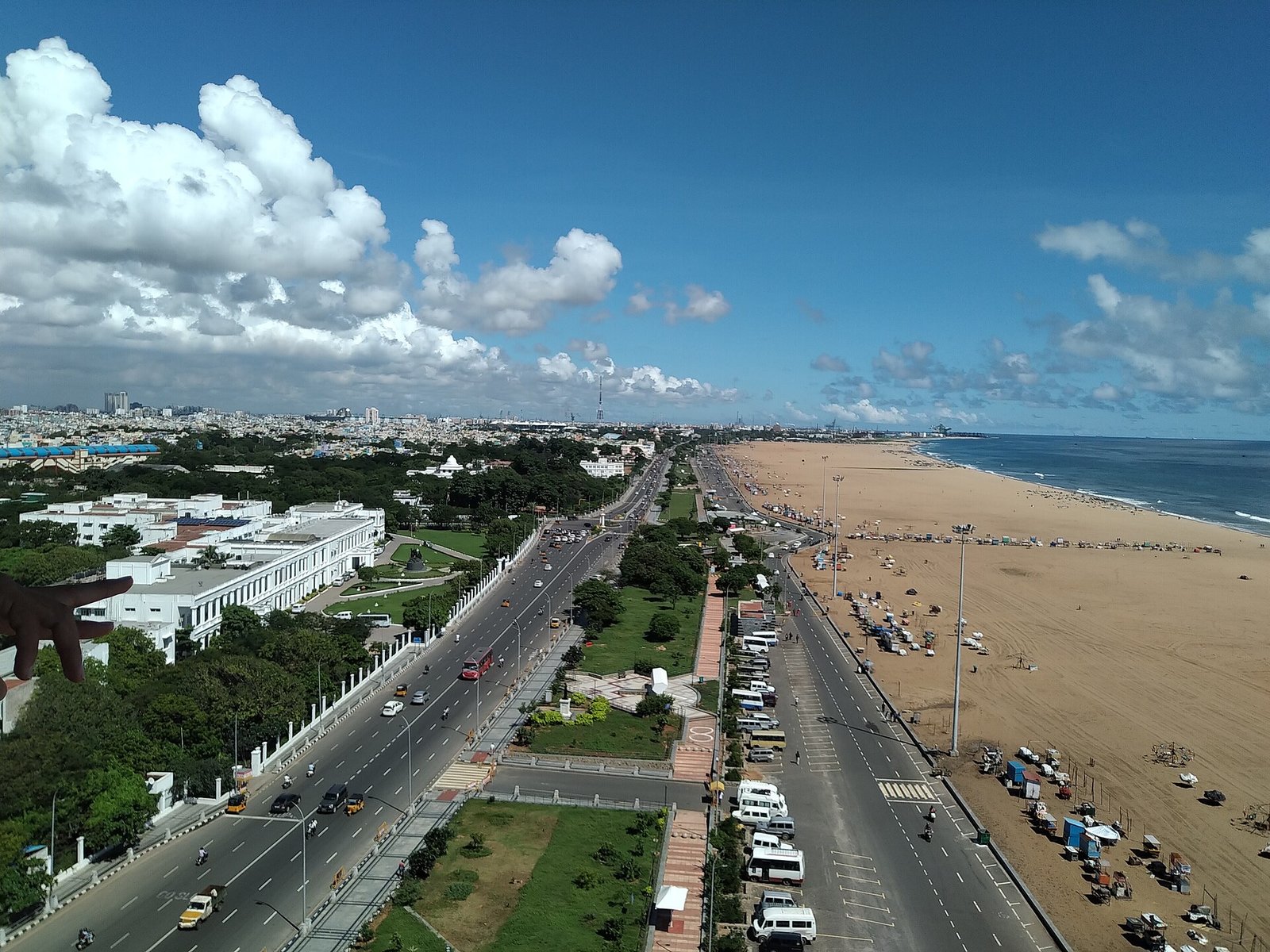
An architectural visit to Chennai need not begin with expert vocabulary. Start by looking at how buildings meet the street, how shade is created and what materials appear repeatedly. Research Marina Beach as one example, then compare it with the ordinary surroundings. The contrast between a celebrated structure and the places people use daily can be the most revealing part of the outing.
Avoid assigning a period or architectural style from appearance alone. Alterations, restorations and later additions can complicate a building's story. Use reliable sources to investigate Fort St George, and keep a small set of questions in mind: who commissioned it, what purpose it served and how its design responds to the setting. These questions work across many different kinds of city.
Chennai, in its own words
Chennai's coast is only one axis of a city shaped by older Tamil neighbourhoods, colonial institutions and cultural collections. Build days around compact areas rather than crossing the metropolis repeatedly. A museum morning and a temple-quarter walk reveal more than a continuous drive between distant monuments. This Book247 edition connects Marina Beach with Government Museum, Egmore, leaving room for Idli and filter coffee and the everyday life around Mylapore market streets.
Look at the street as a complete place
Study the space between buildings as carefully as individual facades. Notice entrances, thresholds, street width, planting and the relationship between movement and pause. Around Mylapore market streets, the arrangement of trading spaces may reveal more about the neighbourhood than an isolated photograph. Observe from appropriate public areas and avoid entering private property to improve a view.
Choose a compact route with a few deliberate comparisons. You might contrast a civic building with housing, a monumental entrance with a working street, or a newer intervention with an older setting. Check walking conditions and traffic crossings. Architectural interest should not require your group to negotiate a route that feels unsafe or exhausting.
Turn observations into better questions
Bring a notebook or use short voice notes to record what you do not yet understand. A repeated material, an unusual roofline or the orientation of a courtyard can become the subject of later research. If photography is permitted, record contextual views as well as details, so the image does not lose its relationship to the street.
For a specialist outing, ask Book247 about a guide brief that favours explanation over rapid movement. Confirm which buildings are only viewed externally and whether any visit depends on separate permission. Keep the itinerary flexible enough to spend longer at one place when its construction or everyday use opens an interesting conversation.
PUT A PLACE TO THE STORY
Three places to research
Valluvar Kottam
The monument commemorates the Tamil poet Thiruvalluvar through a temple-chariot-inspired architectural form. Look closely at proportions and ornament rather than counting another building.
Fort St George
The fort and museum introduce the city's colonial history within an active administrative setting. Read the surviving fabric before moving to the next landmark.
Kapaleeswarar Temple
The Mylapore shrine remains embedded in a living neighbourhood of worship and trade. Follow local worship etiquette and allow time for the surrounding precinct.
Keep the route realistic
Mylapore and Santhome pair with the southern coast, while Egmore and Fort St George form separate central and northern heritage clusters. Group nearby stops before crossing the wider urban area, and keep the two outlying journeys separate from the core sightseeing circuit. Distance on a map rarely captures every transfer.
The cooler part of the year often eases coastal walking; humid heat and northeast-monsoon rain require shaded alternatives. Put exposed stops such as Marina Beach in the more comfortable part of the day, retain an indoor alternative, and confirm local conditions before committing to an excursion.
Before the plan becomes a trip
- Verify style and date claims before repeating them.
- View private buildings from permitted public space.
- Plan safe crossings and comfortable observation points.
- Photograph context as well as architectural details.
Architecture becomes more engaging when you connect design with daily use. Let Chennai teach you a few ways of looking, from the scale of a doorway to the shape of a street. You do not need to name every style to notice something worth understanding.
Sources & useful visitor links
Use the destination and heritage authorities below to check current visitor arrangements. Plan your visits around the current information published by these authorities.