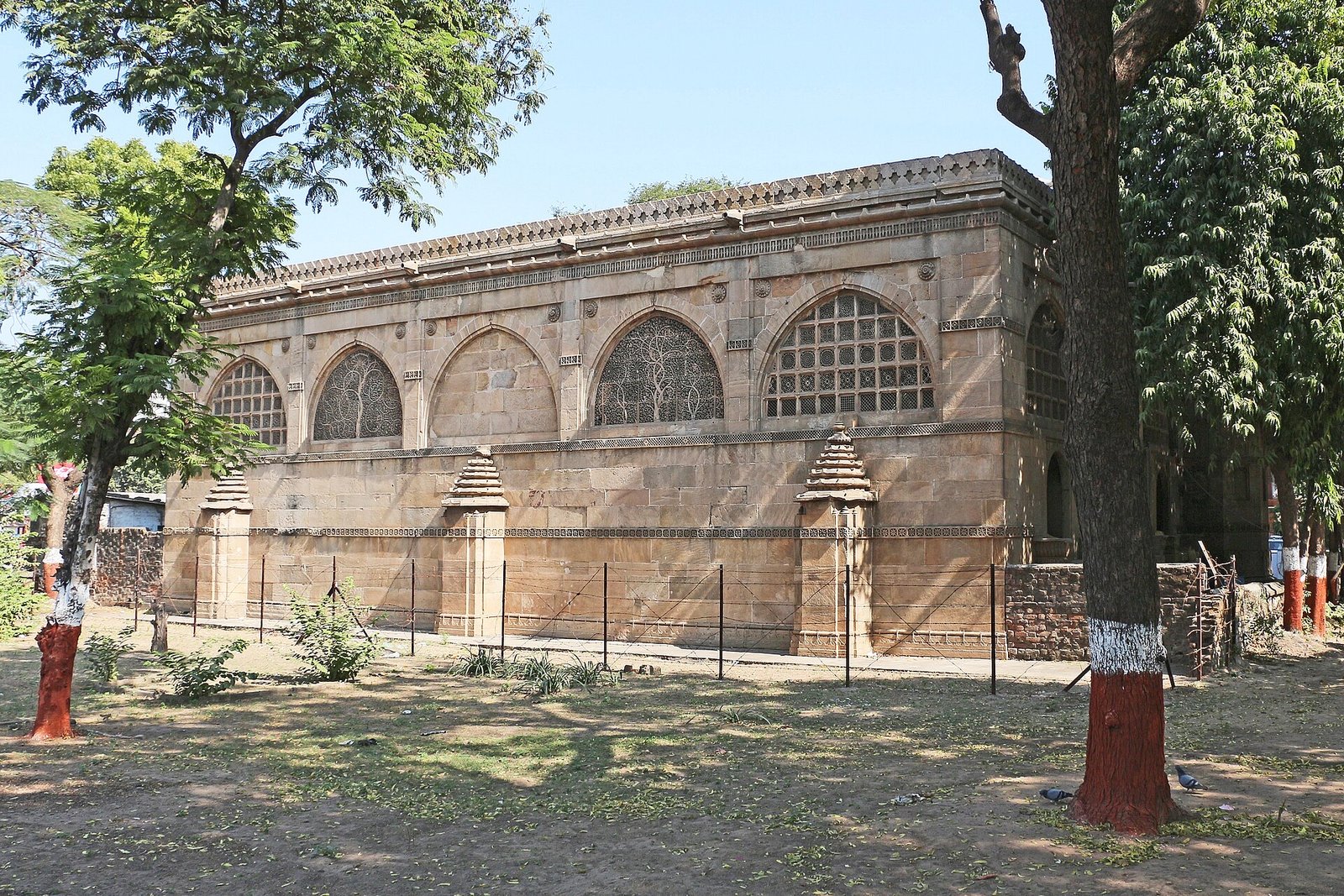
 Illustrative preview
A famous landmark and a modest local experience can make a satisfying pair in Ahmedabad when they explain or contrast with one another. Begin with Sabarmati riverfront, then ask what another nearby setting might add: a different scale, a working craft, a public space or a view of the everyday city. The smaller experience does not need to be hidden or unknown to have value.
Be cautious about descriptions that turn a neighbourhood into a secret discovered for visitors. Places around Manek Chowk or a less-prominent public building already have meaning for the people who use them. Research the context and the limits of access before adding them to an itinerary. A good contrast respects that ordinary life is not an attraction that can be opened on demand.
Ahmedabad, in its own words
Ahmedabad is most revealing when the old city’s pols, mosques and trading streets are read alongside the Sabarmati and the institutions of modern Gujarat. Its UNESCO-listed historic fabric is a lived environment, with residences and religious places woven into a dense urban pattern. Book247 suggests one concentrated heritage walk, then a separate river-and-museum circuit. Stepwells and archaeological excursions broaden the story, but need their own journeys rather than a place in every short city plan.
Find a connection rather than another stop
Ask how the second experience changes your understanding of the first. It might reveal a material used in the landmark, a trade associated with the area or the way public space works at a different scale. If no meaningful relationship emerges, consider whether the combination is worthwhile or simply convenient for filling the remaining hours.
Keep the route compact where possible, but check the actual entrances and walking conditions. A location that appears next to the landmark may require a different approach or have limited public access. Let the smaller visit remain proportionate; its interest may come from a few details observed carefully rather than an elaborate guided presentation.
Give both places the right kind of attention
At the landmark, allow enough time to understand the setting rather than treating it as a photograph to collect before the supposedly authentic part of the day. At the smaller location, avoid assuming the people present owe visitors an explanation. A respectful conversation is welcome when freely offered, but a quiet observation from public space can be enough.
When enquiring through Book247, explain that you want a contrast with context, not a promise of exclusive access. Ask why the proposed pairing makes sense and whether either visit depends on a separate arrangement. Keep Adalaj stepwell as an alternative if the smaller experience is unavailable, while resisting the urge to replace every quiet moment with another formal attraction.
PUT A PLACE TO THE STORY
Three places to research
Sabarmati riverfront
The developed river edges show a modern layer of the city’s public landscape. Choose a manageable section rather than treating the entire waterfront as a single stop.
Adalaj stepwell
Excursion outside the cityThe carved stepwell lies outside the central city. Its descending spaces and stone details reward a separate architectural visit rather than a rushed transit break.
Historic pol neighbourhoods
The residential lanes and courtyards help explain the UNESCO-listed old city’s social fabric. Walk quietly, keeping private thresholds distinct from public streets and shared spaces.
Keep the route realistic
Keep the pols, Jama Masjid and Manek Chowk within one old-city circuit. The ashram and riverfront form a different sequence. Adalaj, Modhera and Patan sit beyond the compact city visit and should be selected by direction, not added indiscriminately to a heritage checklist.
The old city’s walkable detail is easier to appreciate in milder weather. Hotter days favour a short early walk and an indoor historical visit later. Festivals change the atmosphere and movement patterns; riverfront outings should follow the local forecast rather than a fixed sunset promise.
Before the plan becomes a trip
- Identify what the smaller visit adds.
- Check public access before entering a quieter area.
- Give the landmark enough interpretive time.
- Avoid promises of secrecy or exclusive local access.
A well-chosen contrast can make a Ahmedabad day feel both substantial and personal. Visit the celebrated place with attention, then explore a smaller setting on its own terms. The value lies in the relationship you understand, not in claiming to have found somewhere nobody else knows.
Sources & useful visitor links
Use the destination and heritage authorities below to check current visitor arrangements. Plan your visits around the current information published by these authorities.